If you’re planning a construction, repair, or landscaping project, you’ll likely hear the terms concrete and masonry used often. They’re closely related, but they are not the same thing. Understanding the difference between concrete and masonry can help you choose the right material, communicate better with contractors, and make smarter decisions about durability, cost, and design.
What Is Concrete?
Concrete is a building material made from cement, water, and aggregates such as sand, gravel, or crushed stone. When mixed, it forms a paste that hardens over time into a strong, durable surface or structure.
Concrete is widely used for foundations, driveways, sidewalks, slabs, patios, and structural elements. It can be poured into forms, shaped while wet, and reinforced with steel rebar or wire mesh to increase strength.
Key Features of Concrete
- Mixed and poured: Concrete is typically poured into place and allowed to cure.
- Versatile: It can be used for structural and decorative applications.
- Strong in compression: It holds up well under heavy loads.
- Can be reinforced: Steel reinforcement improves tensile strength.
What Is Masonry?
Masonry refers to construction using individual units that are laid and joined together with mortar. These units can be bricks, concrete blocks, stone, or even manufactured masonry units. In other words, masonry is a method of building rather than a single material.
Masonry is commonly used for walls, fireplaces, chimneys, facades, retaining walls, and decorative structures. The strength and appearance of masonry depend on the type of unit used and how it is assembled.
Key Features of Masonry
- Built from units: Masonry uses bricks, blocks, or stone pieces.
- Joined with mortar: Mortar bonds the units together.
- Highly durable: It performs well in many climates when properly built.
- Design-flexible: Masonry offers many colors, textures, and patterns.
Concrete vs. Masonry: The Main Difference
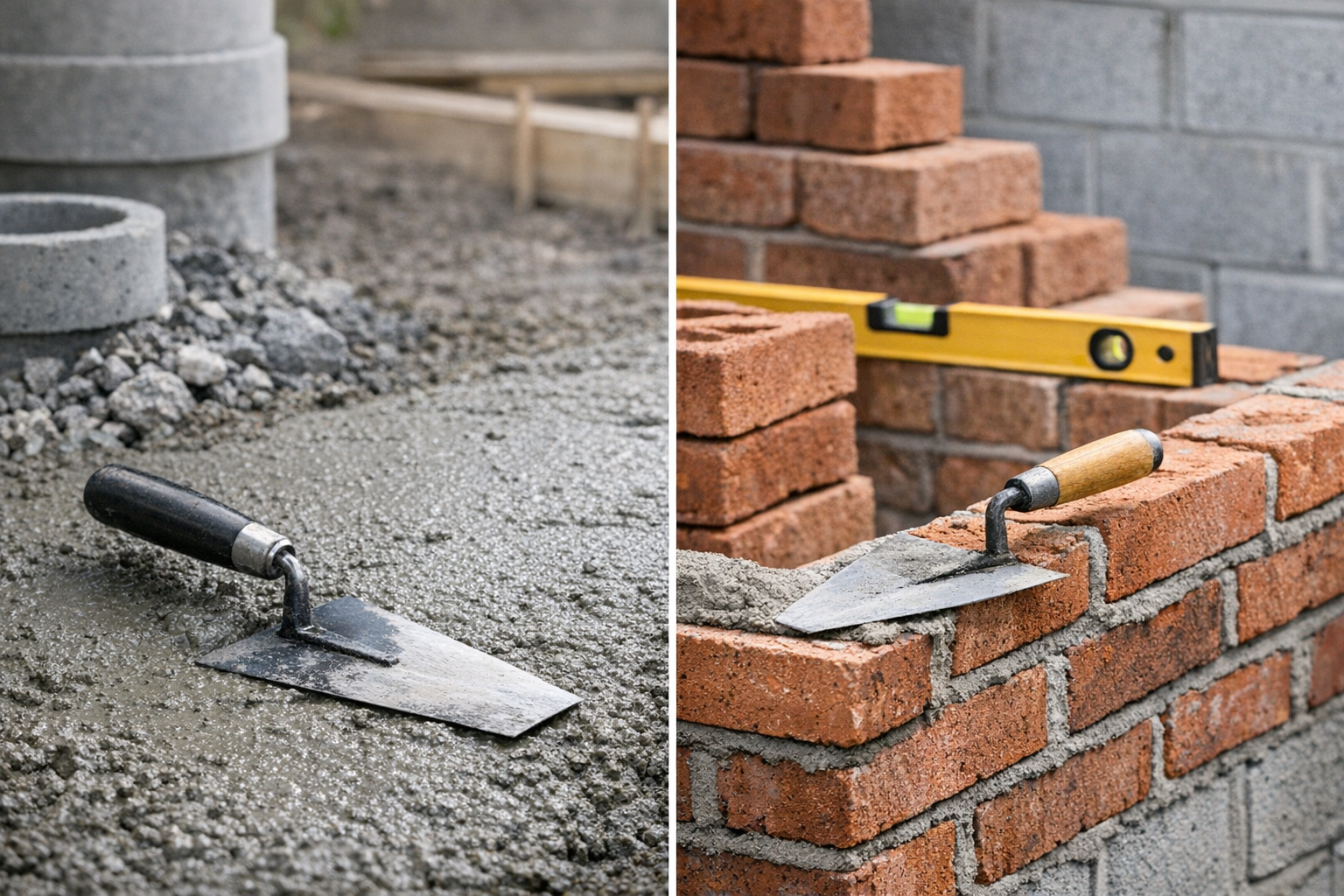
The simplest way to understand the difference is this: concrete is a material, while masonry is a construction technique. Concrete is made by combining ingredients into one solid mass, while masonry is built by arranging individual units and binding them together with mortar.
Concrete often serves as a foundation, slab, or structural element. Masonry is more commonly used for walls and architectural features. However, concrete can also be part of masonry when it is formed into blocks, such as concrete masonry units (CMUs).
Material vs. Method
Concrete is the actual substance. Masonry is the way materials are assembled. This distinction is important because many people use the terms loosely, especially when referring to concrete blocks or brickwork.
How They Are Installed
Concrete is poured, leveled, and cured. Masonry is laid piece by piece, usually with mortar joints between each unit. This difference affects construction speed, labor requirements, and finishing options.
Strength and Performance
Concrete is excellent at handling compression and is often used where solid, monolithic strength is needed. Masonry can also be very strong, especially in load-bearing walls, but its performance depends on the units used, the mortar quality, and the craftsmanship.
Common Uses of Concrete
Concrete is one of the most widely used construction materials in the world because it is affordable, adaptable, and durable.
- Foundations: Supports homes, buildings, and additions.
- Driveways and sidewalks: Provides a smooth, long-lasting surface.
- Floors and slabs: Used in garages, basements, and industrial spaces.
- Retaining structures: Helps stabilize slopes and landscapes.
- Decorative features: Can be stamped, stained, or polished for visual appeal.
Common Uses of Masonry
Masonry is often chosen for its classic appearance and long service life. It is especially popular in projects where texture, pattern, and architectural character matter.
- Walls: Interior and exterior walls in homes and commercial buildings.
- Fireplaces and chimneys: Brick and stone are common for heat-resistant construction.
- Retaining walls: Useful in landscaping and erosion control.
- Facade finishes: Adds visual interest to building exteriors.
- Patios and walkways: Brick and stone create attractive outdoor spaces.
Durability, Cost, and Maintenance
Both concrete and masonry can last for decades, but their maintenance needs and costs differ.
Concrete is generally faster to install for large flat areas, which can make it more cost-effective for slabs and driveways. However, it may crack over time due to settling, temperature changes, or moisture. Sealing and proper control joints help reduce these issues.
Masonry often has a higher labor cost because each unit must be placed individually. Still, it offers excellent longevity and can be easier to repair in small sections. Repointing mortar joints and replacing damaged bricks or blocks are common maintenance tasks.
Which One Should You Choose?
The right choice depends on your project goals. Choose concrete when you need a strong, continuous surface or structure, such as a foundation, slab, or driveway. Choose masonry when appearance, modular construction, or wall systems are important.
For many projects, the two materials work together. A home may have a concrete foundation with masonry walls, or a backyard may feature a concrete patio bordered by stone masonry. In practice, concrete and masonry often complement each other rather than compete.
Conclusion
Concrete and masonry are both essential in construction, but they serve different purposes. Concrete is a poured material known for strength and versatility, while masonry is a method of building with individual units joined by mortar. By understanding how they differ, you can make better choices for your next project and get the results you want in both performance and appearance.