
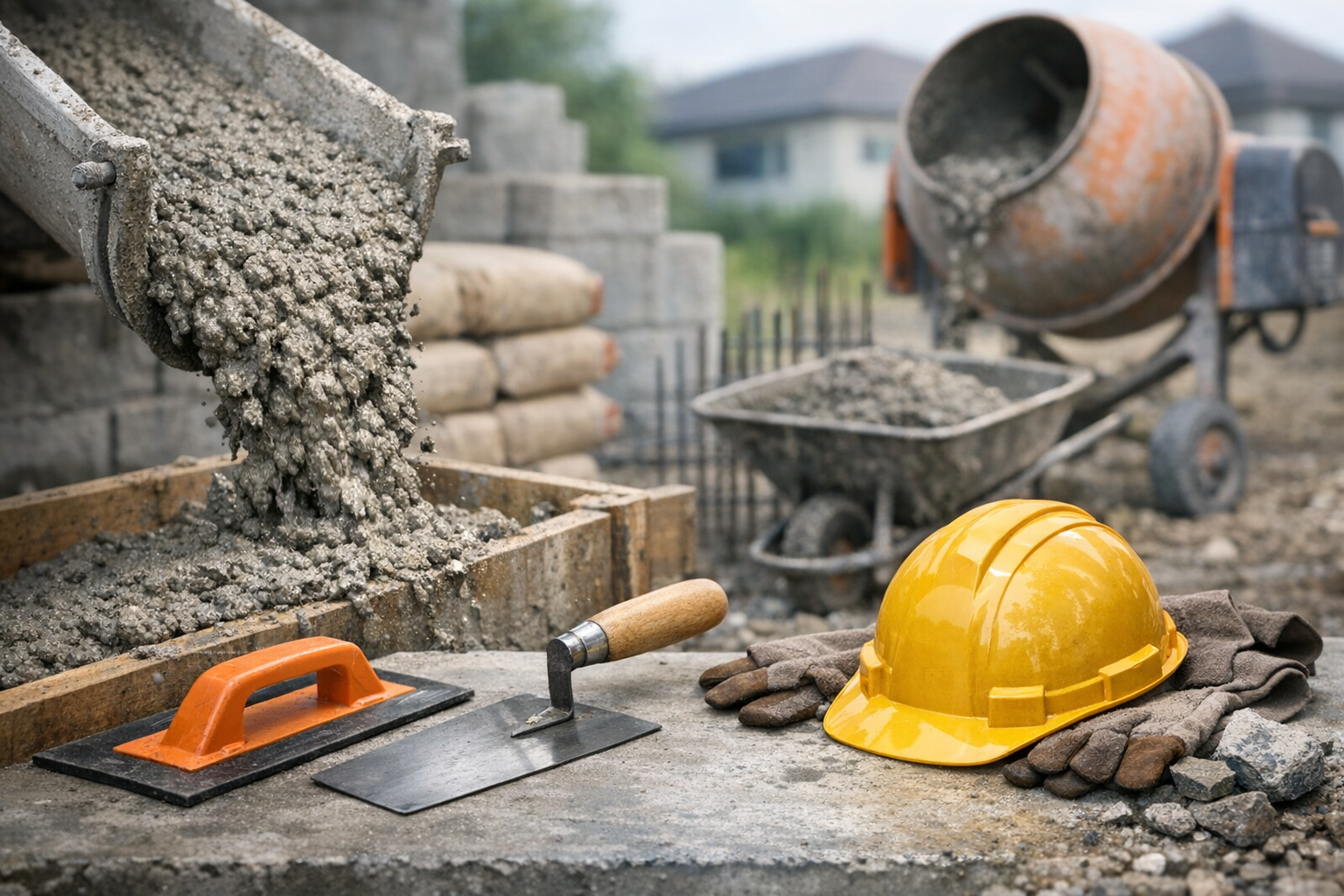
What Makes Concrete High Quality?
When people talk about the best quality concrete, they usually mean concrete that is strong, durable, consistent, and suited to the job at hand. Quality concrete is not just about having a high compressive strength number on paper. It also needs the right mix design, proper materials, good placement, and careful curing. In other words, the best concrete performs well in real-world conditions, not just in a lab test.
High-quality concrete stands up to weather, heavy loads, moisture, freeze-thaw cycles, and everyday wear. It resists cracking, surface scaling, and premature deterioration. Whether you are building a driveway, foundation, patio, sidewalk, or commercial slab, choosing the right concrete mix can make a major difference in how long the structure lasts.
Key Ingredients in the Best Quality Concrete
Concrete is made from four main components: cement, water, aggregates, and optional admixtures. The quality of each ingredient affects the final product.
Cement
Cement acts as the binder that holds everything together. The best quality concrete usually starts with fresh, properly stored cement that meets project specifications. Portland cement is the most common type, but different blends may be used depending on strength, durability, or exposure conditions.
Water
Water is essential for hydration, the chemical reaction that hardens concrete. However, too much water weakens the finished mix. A lower water-cement ratio typically produces stronger, more durable concrete. Clean water is important as well, since contaminants can interfere with curing and long-term performance.
Aggregates
Aggregates make up most of the volume in concrete. They include sand, gravel, and crushed stone. Well-graded, clean aggregates help improve strength, reduce shrinkage, and make the mix easier to work with. Poor-quality or dirty aggregates can lead to weak spots and uneven results.
Admixtures
Admixtures are added to improve specific properties. These may include water reducers, air-entraining agents, accelerators, retarders, or plasticizers. For example, air-entraining admixtures help concrete resist freeze-thaw damage, while water reducers improve strength without making the mix harder to place.
How to Identify the Best Quality Concrete Mix
The right mix depends on the project, but a few signs point to high quality. First, the mix should be designed for the intended use. A concrete driveway, for example, needs a different performance level than a decorative walkway or a structural foundation. Second, the mix should have a consistent slump and water-cement ratio. Consistency helps ensure predictable strength and finish quality.
You should also look for mix specifications that match your environment. If the concrete will be exposed to deicing salts, moisture, or freezing temperatures, durability features become especially important. In those cases, concrete with air entrainment and the right strength rating is often a smart choice.
For many residential applications, a mix in the 3,000 to 4,000 psi range may be suitable, but some projects require higher strength. The best quality concrete is not always the strongest possible mix. It is the mix that balances strength, workability, and durability for the specific project.
Why Proper Mixing and Placement Matter
Even the best ingredients can fail if concrete is mixed or placed incorrectly. Quality concrete must be handled carefully from the truck to the finished surface. Overwatering on site is one of the most common mistakes. It may make the concrete easier to pour, but it also lowers strength and increases the risk of cracking and dusting later on.
Placement is equally important. Concrete should be poured, spread, and consolidated evenly to avoid voids and honeycombing. Proper vibration or tamping helps remove trapped air and ensures the concrete fully surrounds reinforcement and fills corners. Finishing should be done at the right time, not too early and not too late, to avoid surface defects.
The Role of Curing in Concrete Quality
Curing is one of the most overlooked parts of achieving the best quality concrete. Once concrete is placed, it needs time and moisture to continue hydrating and gaining strength. If it dries too quickly, the surface may crack, weaken, or become dusty.
Good curing methods include keeping the surface damp, using curing compounds, or covering the concrete with plastic sheeting or wet burlap. In general, the first few days are critical. Proper curing improves strength, reduces shrinkage cracking, and increases durability over the long term. For many projects, curing should continue for at least seven days, though longer may be better depending on the mix and weather conditions.
Common Problems with Low-Quality Concrete
Low-quality concrete often shows problems early. Cracks may appear soon after installation, surfaces may chip or spall, and the slab may wear out faster than expected. In some cases, poor-quality concrete also absorbs more water, which increases the risk of freeze-thaw damage and corrosion of embedded steel.
Other warning signs include inconsistent color, excessive surface dust, weak edges, and uneven finishing. These issues can come from poor mix design, added water, bad materials, rushed placement, or improper curing. Avoiding these mistakes is essential if you want concrete that looks good and performs well for years.
How to Choose the Right Concrete Supplier or Contractor
If you want the best quality concrete, start by working with a supplier or contractor who understands your project goals. Ask about mix design, expected strength, durability features, and curing recommendations. A reliable supplier should be able to explain why a certain mix is best for your application.
It also helps to ask whether the materials are tested and whether the company follows recognized standards. Reputable contractors pay attention to site conditions, weather, reinforcement, and finishing methods. They will not treat every job the same, because the best concrete solution depends on what you are building.
Tips for Getting the Best Results from Concrete
- Use the right mix for the project, not just the cheapest one.
- Avoid adding extra water on site unless the mix design allows it.
- Place and finish concrete efficiently to reduce defects.
- Protect fresh concrete from extreme heat, cold, wind, and rain.
- Allow proper curing time before heavy use.
- Seal the surface when appropriate to improve resistance to moisture and stains.
These simple steps can greatly improve the performance of your concrete and help you get the value you expect from the project.
Conclusion
The best quality concrete is more than a strong mix. It is a carefully selected combination of materials, placement, and curing that works for the specific job. By focusing on mix design, proper handling, and good finishing practices, you can create concrete that lasts longer, looks better, and performs more reliably. Whether your project is small or large, quality should always come first.