
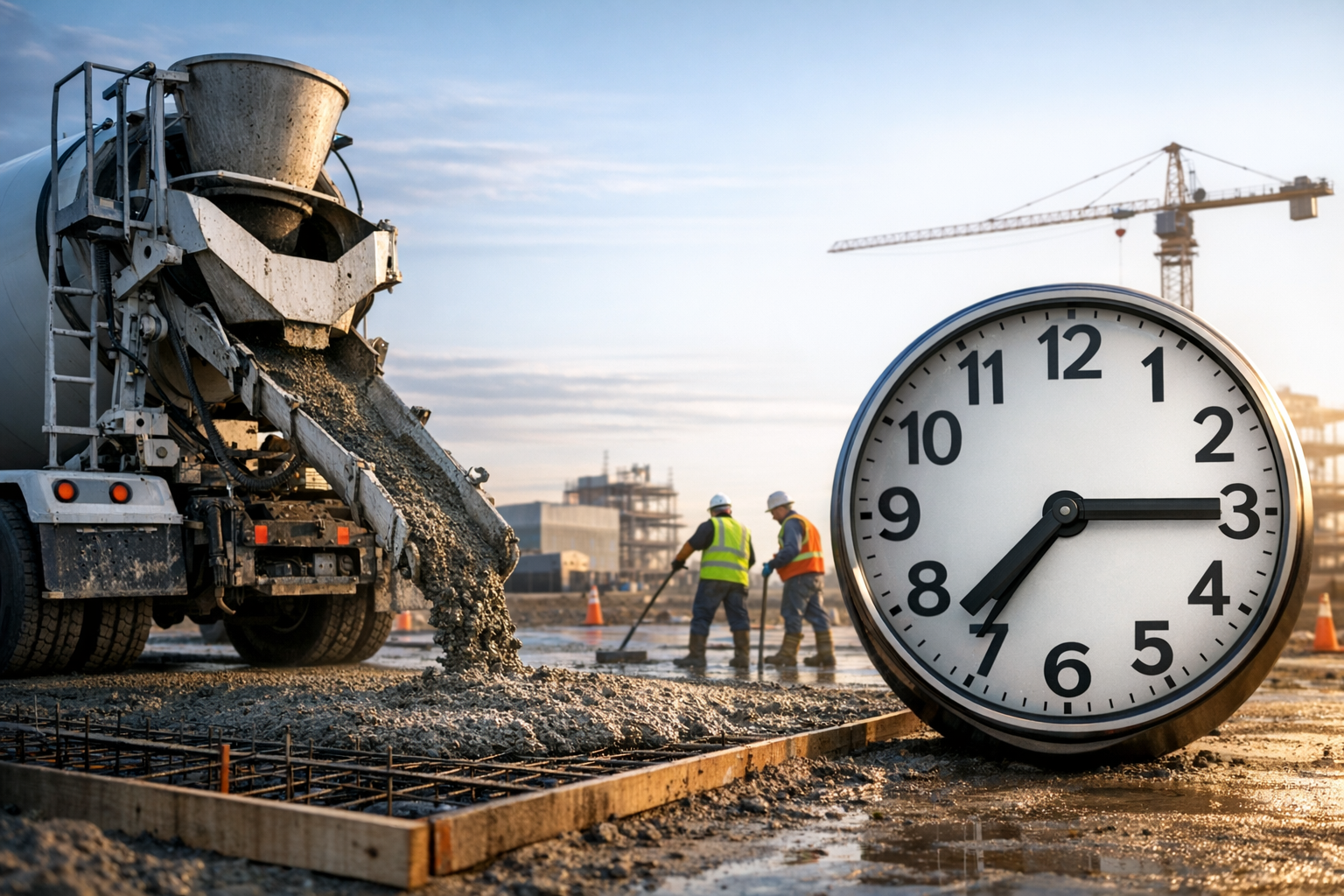
What Is On Time Concrete?
On time concrete refers to concrete that is delivered, placed, and finished according to schedule without unnecessary delays. In construction, timing is critical because concrete is a material with a limited workable window after mixing. If delivery is late or placement is delayed, the concrete may begin to set before it can be properly installed, which can affect quality, strength, and finish.
Whether you are working on a residential driveway, a commercial slab, or a large infrastructure project, on time concrete helps keep the entire job moving smoothly. It supports better coordination between the supplier, crew, and equipment, reducing costly downtime and rework.
Why Timing Matters in Concrete Projects
Concrete is not like other building materials that can sit on a jobsite indefinitely. Once mixed, the clock starts ticking. Temperature, humidity, travel distance, and jobsite preparation all influence how long the mix remains workable. A delay of even 15 or 20 minutes can matter on a busy pour.
When concrete arrives on time, the crew can place it while it is still at the right consistency. This improves finishing quality, helps maintain proper strength, and reduces the risk of cold joints or surface defects. It also keeps labor costs under control because workers are not standing around waiting for trucks or equipment.
Benefits of On Time Concrete
1. Better Project Efficiency
One of the biggest advantages of on time concrete is smoother workflow. Contractors can coordinate forms, reinforcement, pump equipment, and finishing crews with confidence. When everything arrives as planned, each stage of the pour happens in sequence, which minimizes confusion and wasted time.
2. Improved Concrete Quality
Timely delivery helps preserve the intended mix design. Concrete that is placed within the correct time frame is easier to finish, compact, and cure properly. This can lead to stronger slabs, better surface appearance, and fewer structural issues over the life of the project.
3. Lower Labor and Equipment Costs
Delays are expensive. Crews may need to wait longer, equipment may sit idle, and scheduling conflicts can ripple across the project. On time concrete helps avoid these extra costs by keeping everyone productive and reducing the need for rushed corrective work.
4. Better Safety on Site
Construction sites run more safely when operations are predictable. Timely concrete delivery reduces congestion, prevents unnecessary truck movement, and helps workers focus on placement instead of problem-solving under pressure. A well-coordinated pour is usually a safer pour.
Common Challenges That Affect On Time Concrete
Traffic and Distance
One of the most common causes of late delivery is transportation. Heavy traffic, road closures, and long distances from the batch plant can all interfere with schedules. Planning the route and estimating travel time carefully are essential for avoiding delays.
Weather Conditions
Extreme heat, cold, rain, and wind can change how concrete behaves. Hot weather may shorten working time, while cold weather can slow setting and curing. Rain can complicate access and finishing. Reliable scheduling must account for the forecast and allow for weather-related adjustments.
Jobsite Readiness
Even if the truck arrives on time, the pour can still be delayed if the site is not ready. Forms, subgrade, reinforcement, tools, and crew coordination should all be completed before the concrete arrives. A prepared site is just as important as a punctual delivery.
Communication Breakdowns
Miscommunication between the supplier, dispatcher, contractor, and site crew can create major problems. If the delivery time changes and no one is informed, the entire pour can be thrown off. Clear communication is one of the simplest ways to improve on time concrete performance.
How to Plan for On Time Concrete Delivery
Good planning starts long before the truck leaves the plant. Contractors should confirm the pour time, estimate volume accurately, and communicate any special mix requirements in advance. It is also wise to review site access, backup routes, and equipment needs ahead of time.
Batch plants and suppliers can help by scheduling loads strategically, tracking traffic conditions, and staying in contact with the jobsite. For larger jobs, using multiple trucks in a staggered sequence can keep placement continuous and reduce the risk of material sitting too long.
Here are a few practical steps to improve timing:
- Confirm the delivery schedule the day before the pour
- Make sure forms and reinforcement are fully prepared
- Assign one person to manage communication with the supplier
- Have enough crew on site before the first truck arrives
- Prepare for weather and traffic delays with a backup plan
Best Practices for Contractors and Suppliers
On time concrete is a shared responsibility. Contractors should provide accurate load estimates, access details, and placement expectations. Suppliers should offer dependable dispatching, maintain fleet readiness, and keep customers informed if conditions change.
Technology can also make a big difference. GPS tracking, digital scheduling tools, and real-time updates allow teams to respond quickly to delays and adjust plans before problems escalate. The more visibility everyone has, the easier it is to stay on schedule.
Another best practice is to review each pour after completion. If a project ran smoothly, identify what worked well. If there were delays, document the cause and use that information to improve future scheduling. Over time, this process leads to more reliable results and fewer surprises.
Conclusion
On time concrete is about more than punctual delivery. It is a key part of quality, efficiency, and successful project management. When concrete arrives and is placed on schedule, crews work better, costs stay under control, and the finished result is more dependable. With strong planning, clear communication, and a focus on readiness, on time concrete can make every project run more smoothly.