What Makes Concrete the “Best”?
The best concrete is not a single product for every job. It is the mix that matches your project’s demands for strength, durability, finish, budget, and environment. A driveway, patio, foundation, and countertop all need different concrete properties, so the “best” choice depends on performance goals rather than a one-size-fits-all label.
When people talk about high-quality concrete, they usually mean a mix that is consistent, properly proportioned, easy to place, and able to stand up to the conditions it will face over time. The best concrete should resist cracking, hold its shape, cure well, and provide the finish you want with as little maintenance as possible.
Key Factors That Define High-Quality Concrete
Strength and Durability
One of the most important measures of concrete quality is compressive strength, often expressed in psi. Higher strength concrete is generally better for structural applications such as foundations, slabs, and beams. But strength alone does not tell the full story. Durability matters just as much, especially in areas exposed to freeze-thaw cycles, moisture, de-icing salts, or heavy traffic.
The best concrete for long-term performance is designed to resist wear, shrinkage, and environmental damage. This often means using the right cement content, water-to-cement ratio, and admixtures to improve resistance without making the mix difficult to work with.
Workability and Finish
Workability describes how easy concrete is to place, level, and finish. A mix that is too stiff can be hard to install, while one that is too wet may weaken the final result. The best concrete strikes a balance, allowing contractors or DIYers to work efficiently while still producing a strong cured surface.
For decorative work, workability is especially important because the finish must look smooth and even. For stamped, stained, or exposed aggregate concrete, a consistent mix helps achieve attractive results with fewer flaws.
Proper Curing
Even the best mix can fail if it is not cured correctly. Curing is the process that allows concrete to retain moisture long enough to harden properly. Good curing improves strength, reduces cracking, and increases durability. The best concrete is not just about what is in the truck or bag—it is also about how it is installed and maintained after placement.
Types of Concrete and Their Best Uses
Standard Ready-Mix Concrete
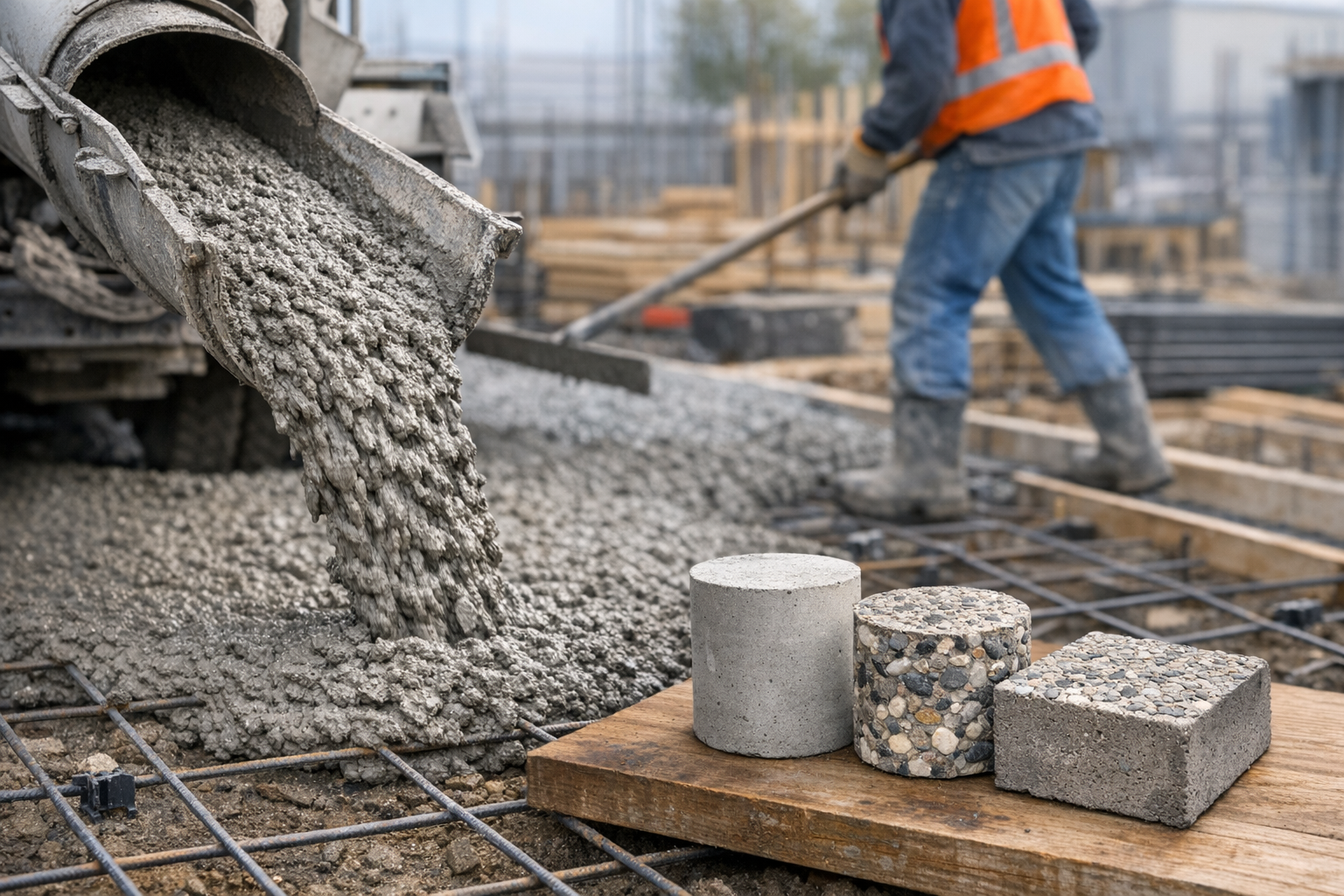
Ready-mix concrete is one of the most common choices for general construction. It is batched at a plant and delivered to the job site ready to pour. This is often the best concrete for driveways, sidewalks, slabs, and foundations because it offers consistency and convenience.
For most residential and commercial projects, ready-mix provides reliable quality and can be customized with admixtures to improve setting time, air content, or workability.
High-Strength Concrete
High-strength concrete is designed for projects that need extra load-bearing capacity. It is commonly used in bridges, high-rise buildings, parking structures, and industrial floors. This type of mix typically has a lower water-to-cement ratio and may include supplementary cementitious materials for added performance.
If your project requires exceptional structural integrity, high-strength concrete may be the best concrete option, though it usually costs more and requires careful placement and curing.
Fiber-Reinforced Concrete
Fiber-reinforced concrete includes small synthetic, glass, steel, or natural fibers that help reduce cracking and improve toughness. It is especially useful for slabs, driveways, and areas where shrinkage cracks are a concern. While fibers do not replace traditional reinforcement in structural applications, they can improve performance in many residential and commercial uses.
This is often a smart choice when you want the best concrete for crack resistance and surface durability.
Self-Consolidating Concrete
Self-consolidating concrete flows easily into place without the need for much vibration. It is ideal for complex forms, heavily reinforced sections, and jobs where a smooth, consistent finish is important. Because it reduces labor and helps prevent voids, it can be one of the best concrete options for precision work.
Decorative Concrete
When appearance is a top priority, decorative concrete may be the best choice. This category includes stamped, colored, polished, and exposed aggregate finishes. Decorative concrete can mimic stone, brick, or tile while offering the strength and practicality of a concrete surface.
It works especially well for patios, pool decks, walkways, and interior floors where style matters as much as performance.
How to Choose the Best Concrete for Your Project
Match the Mix to the Application
The first step is identifying how the concrete will be used. A garage floor needs different properties than a garden path. Structural work calls for strength and durability, while decorative features may prioritize finish and appearance. The best concrete is the one designed for your specific load, exposure, and usage requirements.
Consider the Climate
Weather has a big impact on concrete performance. In cold climates, air-entrained concrete can help resist damage from freezing and thawing. In hot, dry conditions, mixes that control evaporation and slow setting may perform better. If your project will be exposed to moisture, salts, or chemicals, choose a concrete mix designed for that environment.
Think About Maintenance
Some concrete options require more upkeep than others. Decorative surfaces may need sealing, while high-traffic areas may benefit from tougher finishes or hardeners. The best concrete should fit not only your budget today but also the time and cost you are willing to spend maintaining it in the future.
Work With a Trusted Supplier or Contractor
Even a great mix design can fall short if it is poorly handled. A knowledgeable supplier or contractor can recommend the best concrete based on your project size, local conditions, and performance goals. Ask about strength ratings, admixtures, curing recommendations, and any special requirements before you order.
Benefits of Using the Best Concrete
Choosing the right concrete upfront can save money and stress over time. Quality concrete helps reduce repairs, extends the life of the structure, and improves the overall look of the finished project. It can also make installation smoother, which may lower labor costs and reduce mistakes.
For homeowners, that may mean a driveway that resists cracking and staining. For builders, it may mean a foundation that performs reliably for decades. In every case, the best concrete delivers a better balance of strength, appearance, and long-term value.
Conclusion
The best concrete is the one that fits your project’s needs, climate, and performance goals. By focusing on strength, workability, durability, and proper curing, you can choose a mix that delivers lasting results. Whether you need a structural slab, a decorative patio, or a heavy-duty commercial floor, selecting the right concrete is the foundation of a successful build.