
Quality concrete work is more than mixing cement, water, and aggregate and pouring it into a form. It is a careful process that combines planning, skill, timing, and attention to detail. When done correctly, concrete can deliver decades of strength, stability, and visual appeal. When done poorly, it can crack, settle, stain, or fail long before it should. Whether you are planning a driveway, patio, sidewalk, foundation, or slab, understanding what goes into quality concrete work can help you make better decisions and get better results.
What Quality Concrete Work Means
Quality concrete work begins with proper preparation and ends with a finished surface that is strong, level, and built to last. It involves using the right materials, the right mix design, and the right installation methods for the project. Good concrete should meet the demands of the site, the climate, and the intended use.
More importantly, quality is not just about appearance. A smooth finish may look nice, but true quality is measured by durability, structural performance, and resistance to common problems like cracking, scaling, and water damage. The best concrete work balances strength and aesthetics so the finished product performs well and looks good for years.
The Planning Stage Matters
Before any concrete is poured, the project needs a solid plan. This includes evaluating the soil, determining drainage needs, choosing the correct thickness, and identifying any reinforcement requirements. A well-planned project reduces the chance of future problems.
Soil conditions are especially important. Weak or unstable soil can shift under the slab, leading to settling and cracking. In many cases, the site needs to be compacted and graded properly before the forms are installed. Drainage should also be considered early, since water pooling around concrete can shorten its lifespan.
Choosing the right mix
The concrete mix itself plays a major role in quality. The mix must be appropriate for the project and local conditions. Factors such as compressive strength, workability, air content, and water-cement ratio all affect how the concrete performs. Too much water may make the concrete easier to place, but it can also weaken the finished slab. A balanced mix creates stronger, longer-lasting results.
Proper Site Preparation
Even the best concrete mix will not perform well if the site is not prepared correctly. Quality work starts with clearing debris, removing weak material, and creating a stable base. The subgrade should be compacted to reduce movement after the pour.
Forms must also be set accurately. These temporary structures shape the concrete and help determine the final dimensions and level of the slab. If the forms are not straight, secure, and properly aligned, the finished work may look uneven or become structurally unsound.
In many projects, a gravel base is added to improve drainage and support. This layer helps distribute weight and can reduce the chance of cracking caused by shifting soil or trapped moisture.
The Importance of Reinforcement
Reinforcement is often a key part of quality concrete work. Depending on the application, contractors may use rebar, wire mesh, fibers, or a combination of reinforcement methods. These materials help concrete handle tension and movement better than concrete alone.
It is important to understand that reinforcement does not prevent all cracking. Concrete naturally shrinks as it cures and can still crack if it experiences movement or stress. However, proper reinforcement helps control cracks and improve overall structural performance. When installed correctly, it can make a major difference in the durability of the finished surface.
Pouring and Finishing with Care
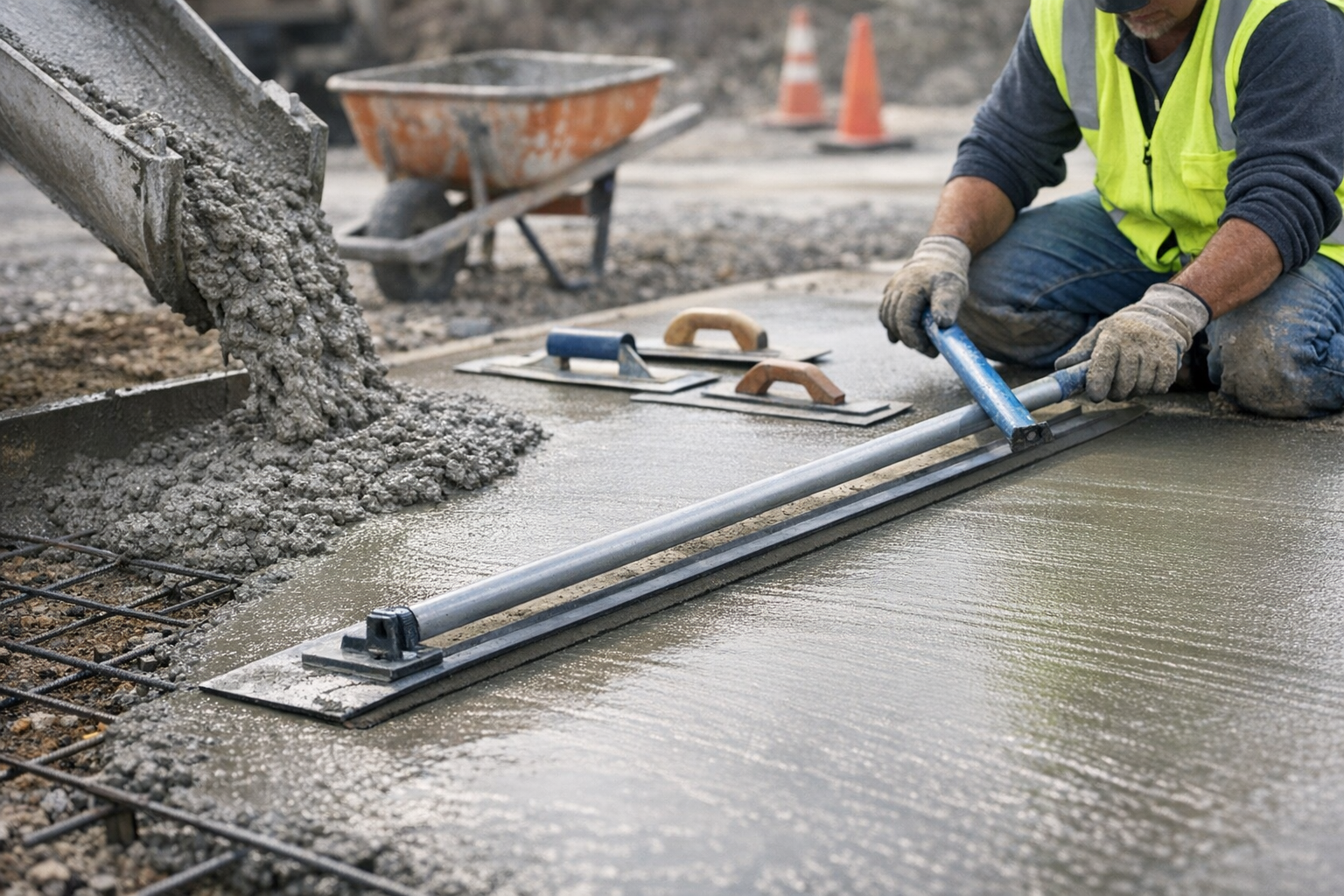
The pouring stage requires speed, coordination, and precision. Concrete must be placed evenly and worked into all corners without creating voids or weak spots. If concrete is poured too slowly, sections may begin to set before the job is complete. If it is poured carelessly, air pockets and uneven thickness can become problems later.
Once the concrete is in place, finishing begins. This includes screeding, floating, edging, and, when needed, brooming or applying a decorative finish. Each step serves a purpose. Screeding levels the surface, floating smooths it, edging helps strengthen vulnerable corners, and final finishing improves both appearance and traction.
Timing is everything
Concrete finishing must happen at the right time. If it is finished too early, excess water may be worked into the surface, weakening the top layer. If it is finished too late, the concrete may become too stiff to work properly. Experienced crews know how to read the surface and adjust their timing based on temperature, humidity, and mix conditions.
Curing Is Essential
One of the most overlooked parts of quality concrete work is curing. Fresh concrete does not simply dry; it cures through a chemical process that requires moisture and time. Proper curing helps concrete reach its intended strength and reduces the risk of premature cracking.
Curing methods may include water curing, curing compounds, plastic sheeting, or wet coverings. The goal is to keep moisture in the slab long enough for the concrete to develop properly. Skipping this step or curing too briefly can compromise the final result, even if the pour and finish looked perfect.
Common Problems That Lower Concrete Quality
Several issues can reduce the quality of a concrete project. Some of the most common include:
- Using too much water in the mix
- Poor compaction of the subgrade
- Inadequate reinforcement
- Improper finishing techniques
- Rushing the curing process
- Poor drainage around the slab
These mistakes can lead to cracking, surface dusting, scaling, uneven settling, and reduced lifespan. The good news is that most of them are preventable with proper planning and skilled workmanship.
Why Hiring Skilled Professionals Matters
Quality concrete work depends heavily on experience. A skilled contractor understands how to prepare the site, choose the right materials, and adjust for weather and site conditions. They also know how to avoid common mistakes that can be expensive to fix later.
Professional concrete crews bring consistency to the job. They have the tools, knowledge, and process needed to deliver a finish that is both functional and attractive. For homeowners and business owners, hiring the right team can mean the difference between a short-term fix and a long-lasting investment.
Conclusion
Quality concrete work comes down to careful planning, proper preparation, skilled installation, and thorough curing. When each step is done right, the result is a surface or structure that stands up to daily use and the elements. If you want concrete that lasts, focus on quality from the ground up.