What Is the Top of Concrete?
The top of concrete is the exposed upper surface of a concrete slab, footing, wall cap, curb, or other structural element. It is the part most people see, walk on, place items on, or build over. Because it is directly exposed to weather, traffic, moisture, and wear, the top surface plays a major role in both appearance and durability.
In many projects, the top of concrete is more than just a finished surface. It affects drainage, safety, structural performance, and how well the concrete resists damage over time. A well-prepared and properly protected top surface can help prevent cracking, scaling, staining, and premature deterioration.
Why the Top of Concrete Matters
The top of concrete often takes the most abuse. Sunlight, rain, freeze-thaw cycles, foot traffic, vehicle loads, and spills all act on this surface first. If the top layer is poorly finished or left unprotected, problems can develop faster than in the rest of the structure.
A strong top surface helps with:
- Durability: Reducing wear, dusting, and surface breakdown.
- Water resistance: Limiting water absorption and surface damage.
- Safety: Providing traction and reducing slip hazards.
- Appearance: Creating a clean, attractive finish.
- Maintenance: Making the surface easier to clean and protect.
Whether you are working on a driveway, patio, slab, retaining wall cap, or commercial floor, the top of concrete deserves careful attention from the start.
Common Top of Concrete Finishes
There are several ways to finish the top of concrete, and each serves a different purpose. The right choice depends on how the surface will be used and how much texture or visual appeal is desired.
Troweled Finish
A troweled finish is one of the smoothest options. It is created by working the concrete surface with a hand trowel or power trowel while the material is still workable. This finish is common for interior slabs and some exterior areas where a smooth surface is desired.
However, a very smooth top of concrete can become slippery when wet, so it may not be ideal for all outdoor applications.
Broom Finish
A broom finish is created by dragging a broom lightly across the surface before the concrete fully sets. This produces fine ridges that add texture and traction. It is a popular choice for sidewalks, driveways, patios, and other exterior surfaces where slip resistance matters.
Exposed Aggregate
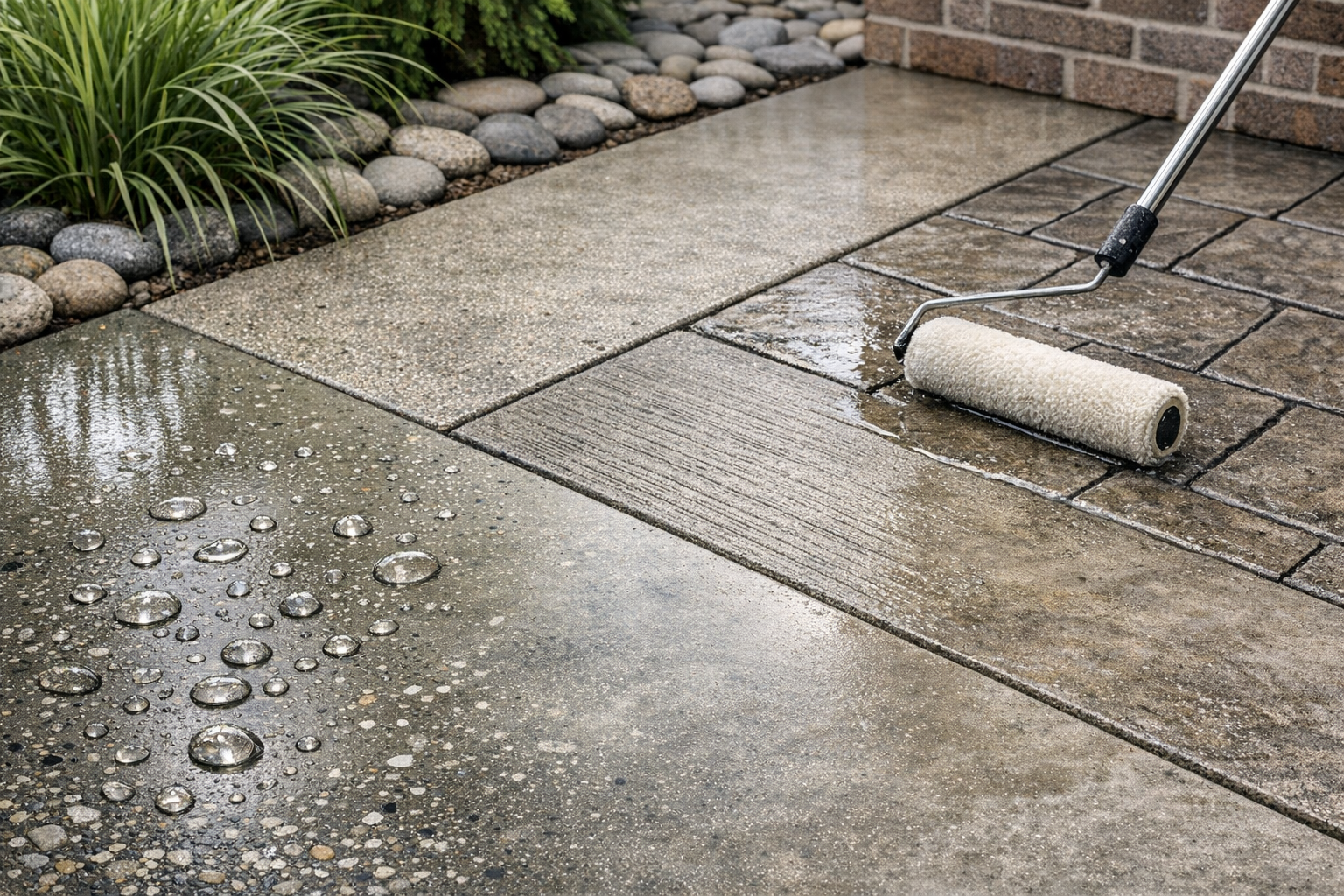
An exposed aggregate finish reveals the decorative stones within the concrete mix. The top layer of cement paste is removed to show the aggregate below. This finish offers a decorative look and good traction, making it a common choice for walkways and high-end outdoor surfaces.
Stamped or Decorative Finish
Stamped concrete mimics the look of stone, brick, tile, or wood. The pattern is pressed into the top of concrete before it hardens. This option is often used when appearance is a top priority, especially on patios, pool decks, and entryways.
How to Protect the Top of Concrete
Even a well-finished surface needs protection. Concrete is strong, but its top layer can absorb moisture and suffer damage if left untreated. Protecting the surface helps preserve its condition and extend its service life.
Use a Quality Sealer
A concrete sealer helps block water, salt, oil, and other contaminants from penetrating the surface. Some sealers also enhance color and sheen, while others remain nearly invisible. For exterior concrete, a breathable penetrating sealer is often a smart choice because it helps reduce moisture damage without trapping water inside.
Control Water Drainage
Poor drainage is one of the biggest threats to the top of concrete. Standing water can lead to stains, cracking, scaling, and freeze-thaw damage. Sloping the surface properly and keeping nearby drainage paths clear can make a major difference.
Apply Joint and Crack Maintenance
Control joints help concrete crack in predictable locations, but those joints must remain in good condition. Seal open cracks and damaged joints to prevent water intrusion and further deterioration. Regular inspection is especially important in older slabs and high-traffic areas.
Avoid Harsh Chemicals
Deicing salts, strong acids, and aggressive cleaners can damage the top of concrete. Whenever possible, use concrete-safe cleaning products and remove spills quickly. In winter climates, limit the use of deicers that can accelerate scaling and surface wear.
Signs the Top of Concrete Needs Attention
Over time, the top surface can show wear that signals a need for repair or restoration. Catching issues early can prevent more expensive work later.
Watch for these warning signs:
- Surface cracking or map cracking
- Scaling or flaking on the top layer
- Dusting or a powdery surface
- Stains from oil, rust, or moisture
- Uneven wear or pitting
- Loss of traction or visible smoothing
If these issues are minor, cleaning and resealing may help. More serious damage may require resurfacing, patching, or professional assessment.
Best Practices for Long-Term Performance
To keep the top of concrete performing well, start with the right mix, proper placement, and careful curing. The surface strength depends heavily on how the concrete is installed. Good workmanship during the first stages is often the difference between a long-lasting slab and one that needs early repairs.
Here are a few best practices to follow:
- Place and finish the concrete carefully to avoid weak surface paste.
- Allow proper curing time before heavy use or sealing.
- Choose the right finish for the environment.
- Inspect the surface regularly for cracks or wear.
- Clean the concrete with gentle tools and approved products.
- Reseal the surface as needed based on exposure and traffic.
For outdoor surfaces, seasonal maintenance is especially useful. A quick inspection in spring and fall can help identify damage from winter weather or summer heat before it spreads.
When to Repair or Resurface the Top of Concrete
Not every worn concrete surface needs replacement. In many cases, the top of concrete can be restored with resurfacing products, overlays, or targeted repairs. This is often a cost-effective way to improve both function and appearance.
Resurfacing may be a good option if the slab is structurally sound but the surface is rough, stained, or lightly damaged. However, if the concrete is severely cracked, settling, or crumbling, a full replacement may be the better long-term solution.
Conclusion
The top of concrete is the part that determines how a surface looks, feels, and holds up over time. With the right finish, proper sealing, and regular maintenance, it can stay durable and attractive for many years. Paying attention to the top surface is one of the simplest ways to protect your concrete investment.